Trieste
From Warlike
Trieste is a Swiss-designed, Italian-built deep-diving research bathyscaphe. In 1960, it became the first crewed vessel to reach the bottom of Challenger Deep in the Mariana Trench, the deepest point in Earth's seabed. The mission was the final goal for Project Nekton, a series of dives conducted by the United States Navy in the Pacific Ocean near Guam. The vessel was piloted by Swiss oceanographer Jacques Piccard and US Navy lieutenant Don Walsh. They reached a depth of about 10,916 metres (35,814 ft).
1952
Wikimedia, Wikidata
Trieste
length 18.14 metre, mass 50 tonne, draft 5.46 metre, beam 3.51 metre,
Cantieri Riuniti dell'Adriatico, French Navy, United States Navy, Italy, 
-
Location: 11.3167, 142.25, KML, Cluster Map, Maps,
-

HMS Challenger ⓘ
1932 survey vessel -

Trieste ⓘ
deep sea scientific submarine
1952-01-01T00:00:00Z
1952-01-01T00:00:00Z
1952 Trieste
1953-08-01T00:00:00Z
1953-08-01T00:00:00Z
ship launching
{"selectable":false,"showCurrentTime":false,"width":"100%","zoomMin":100000000000}
 Bathyscaphe Trieste
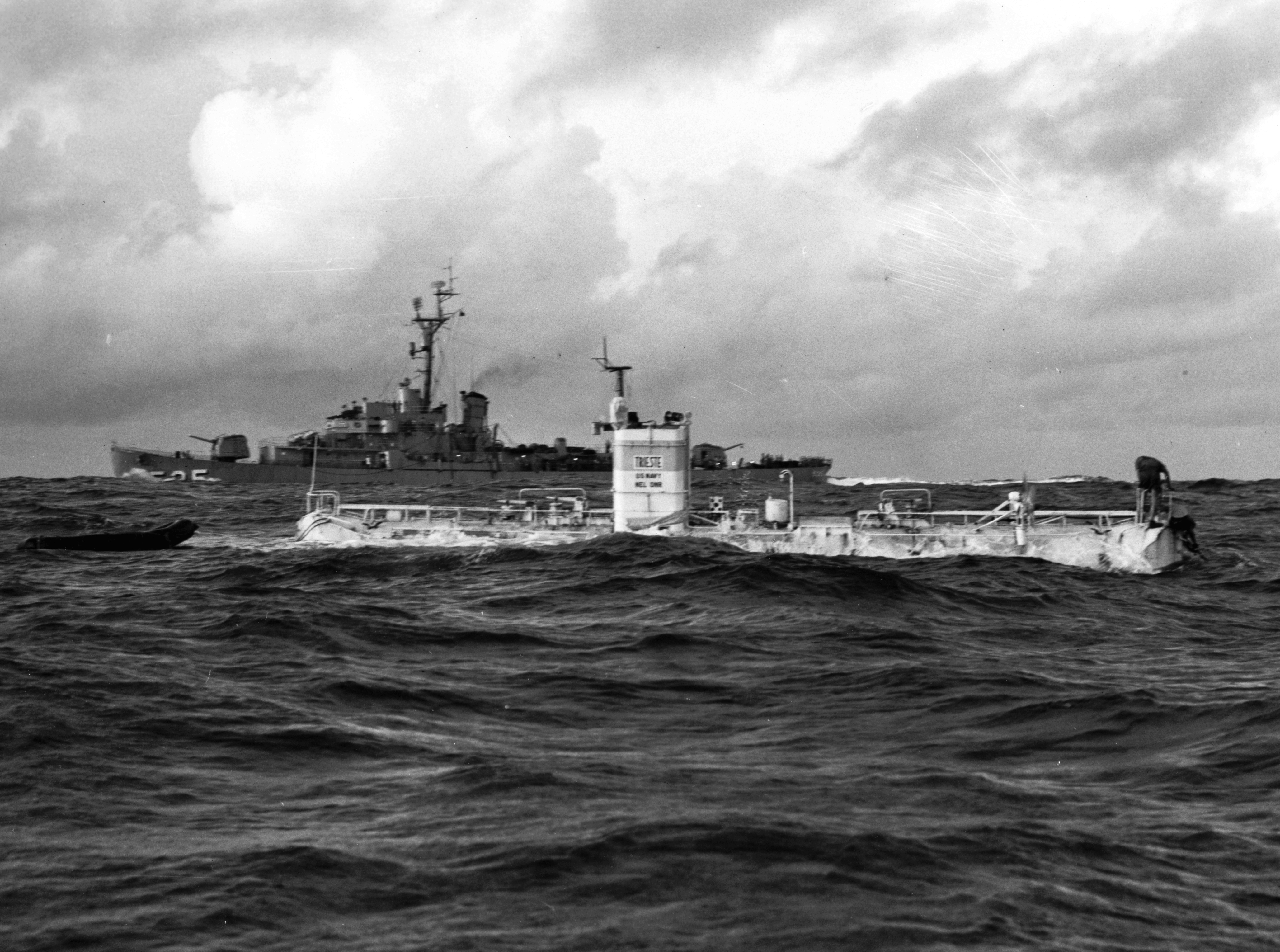 U.S. Navy Bathyscaphe Trieste
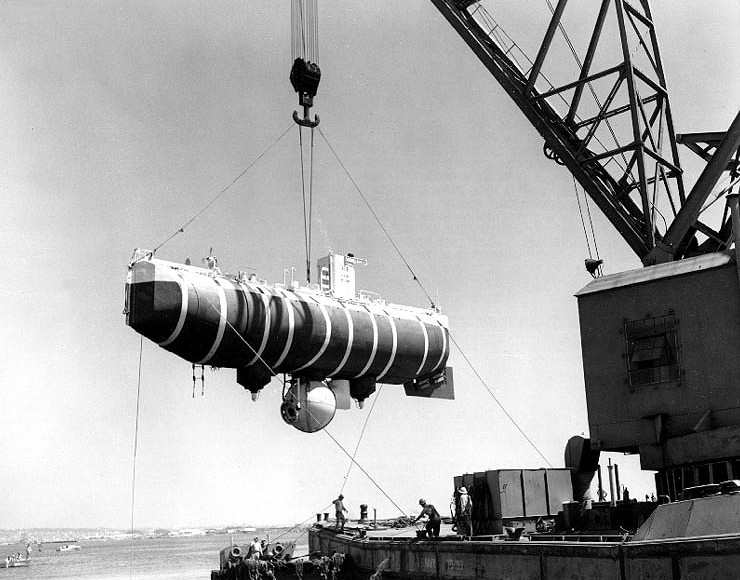 US Navy Bathyscaphe Trieste
| Type | Subtype | Date | Description | Notes | Source |
|---|---|---|---|---|---|
| object | watercraft | 1931 | HMS Challenger | survey vessel | Wikidata |
| object | watercraft | 1952 | Trieste | preserved watercraft, bathyscaphe, submarine | Wikidata |
| commons | image | Bathyscaphe Trieste | Commons | ||
| commons | image | U.S. Navy Bathyscaphe Trieste | Commons | ||
| commons | image | US Navy Bathyscaphe Trieste | Commons | ||
_over_the_Marianas_Trench,_23_January_1960_(NH_96797).jpg)
