atomic bombings of Hiroshima and Nagasaki
From Warlike
Q488
On 6 and 9 August 1945, the United States detonated two atomic bombs over the Japanese cities of Hiroshima and Nagasaki, respectively, during World War II. The aerial bombings killed 150,000 to 246,000 people, most of whom were civilians, and remain the only uses of nuclear weapons in an armed conflict. Japan announced its surrender to the Allies on 15 August, six days after the bombing of Nagasaki and the Soviet Union's declaration of war against Japan and invasion of Manchuria. The Japanese government signed an instrument of surrender on 2 September, ending the war.
1945
Wikimedia, Wikidata
United States, Harry S. Truman, Empire of Japan, Enola Gay, William Sterling Parsons, Paul Tibbets, Shunroku Hata, Empire of Japan, 
Aoba, Iwate, Izumo,
-
Location: 32.7496, 129.8763, KML, Cluster Map, Maps,
8 places
-

ⓘ
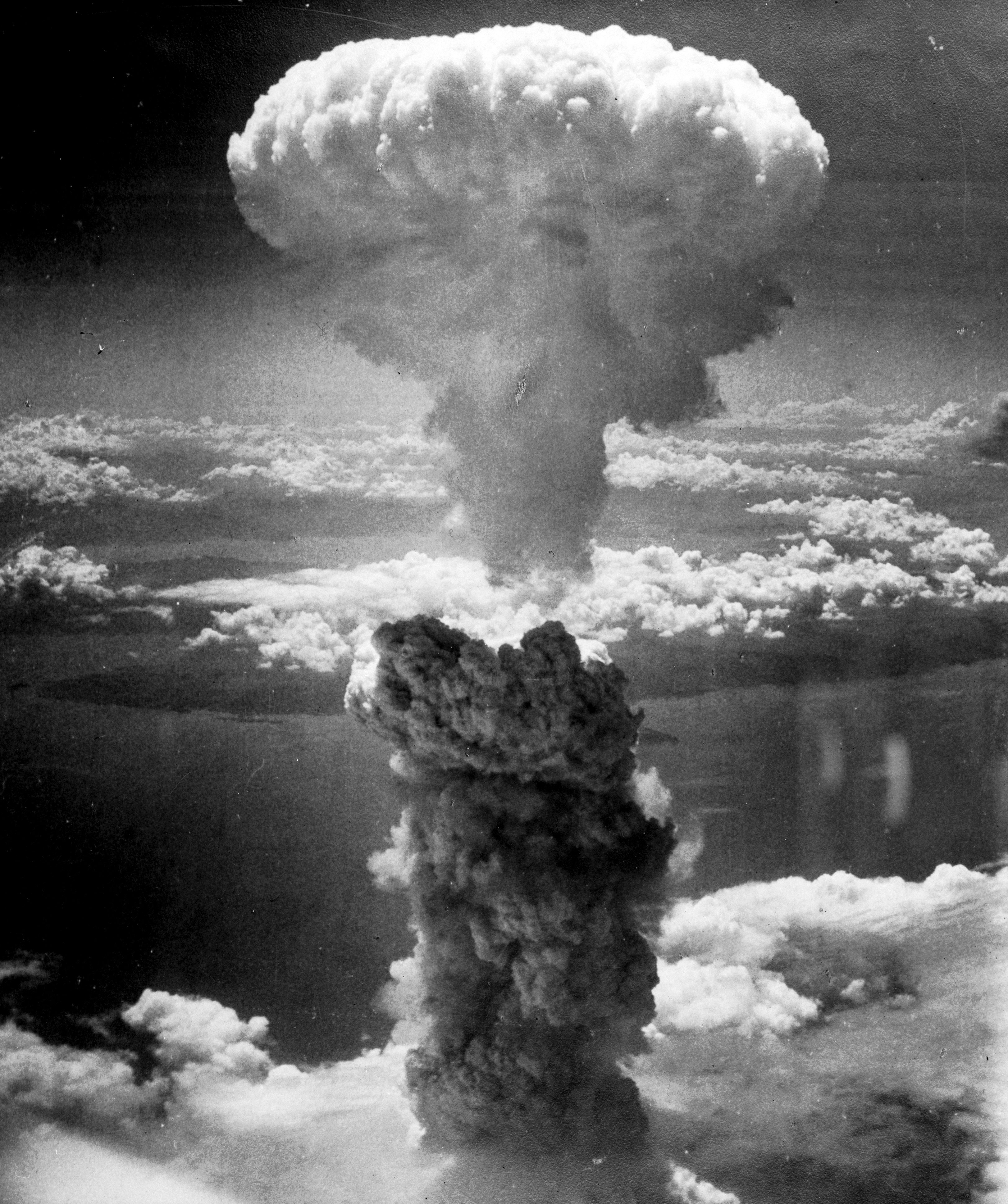 The atomic bomb explosion over Nagasaki 1945 mushroom cloud
 Wide Road Acting As Fire Break - DPLA - d1993e429c2cc2f98971ada71b934a3b
 Buildings Destroyed By Blast - DPLA - 0e357cc859af533ff4c1257fac4388f9
 Minor Blast Damage - DPLA - 65f51eb7d51e756b1b8dd5d251bf686c
 Assembly Area For Dead - DPLA - d58fb73e6d1a0f1a60397f49a4ea0ffc
 Buildings Destroyed By Blast and Fire - DPLA - 5e37c6cbca67677875c9c10d9873a345
 First leaflet which was dropped on Japanese cities in conjunction with the Atomic Bomb
 Ralph Austin Bard signature
 Amid the wreckage of a prison in Nagasaki, three Manhattan Project specialists use Geiger counters to measure residual radioactivity. Left to right: Captain Henry Barnett, Robert Serber, and Captain Harry O. Whipple.
 Hiroshima.Bombing-Operations.Order No.35-5-Aug-1945
- “A Very Pleasant Way to Die”: Radiation Effects and the Decision to Use the Atomic Bomb against Japan* - scientific article published on 24 April 2012, Q1860
- Town of Evening Calm, Country of Cherry Blossoms - Japanese manga series, Japanese, 2007
- The Face of Jizo - 2001 Japanese play written by Hisashi Inoue directed by Kazuo Kuroki, Japanese
- Killing the Rising Sun - 2016 book by Bill O'Reilly, English, online
- The Bells of Nagasaki - 1950 non-fiction work by Takashi Nagai, Japanese
- Atomic bombing of Hiroshima and Nagasaki - August 2001 scholarly article in Strategic Analysis of the Institute for Defence Studies and Analysis, Q1860
- Town of Evening Calm, Country of Cherry Blossoms - Japanese manga series, Japanese, 2007
- Town of Evening Calm, Country of Cherry Blossoms - Japanese manga series, Japanese, 2007


Rummage summary