Company rule in India
From Warlike
Company rule in India refers to regions of the Indian subcontinent under the control of the British East India Company (EIC). The EIC, founded in 1600, established its first trading post in India in 1612, and gradually expanded its presence in the region over the following decades. During the Seven Years' War, the East India Company began a process of rapid expansion in India, which resulted in most of the subcontinent falling under its rule by 1857, when the Indian Rebellion of 1857 broke out. After the rebellion was suppressed, the Government of India Act 1858 resulted in the EIC's territories in India being administered by the Crown instead. The India Office managed the EIC's former territories, which became known as the British Raj.

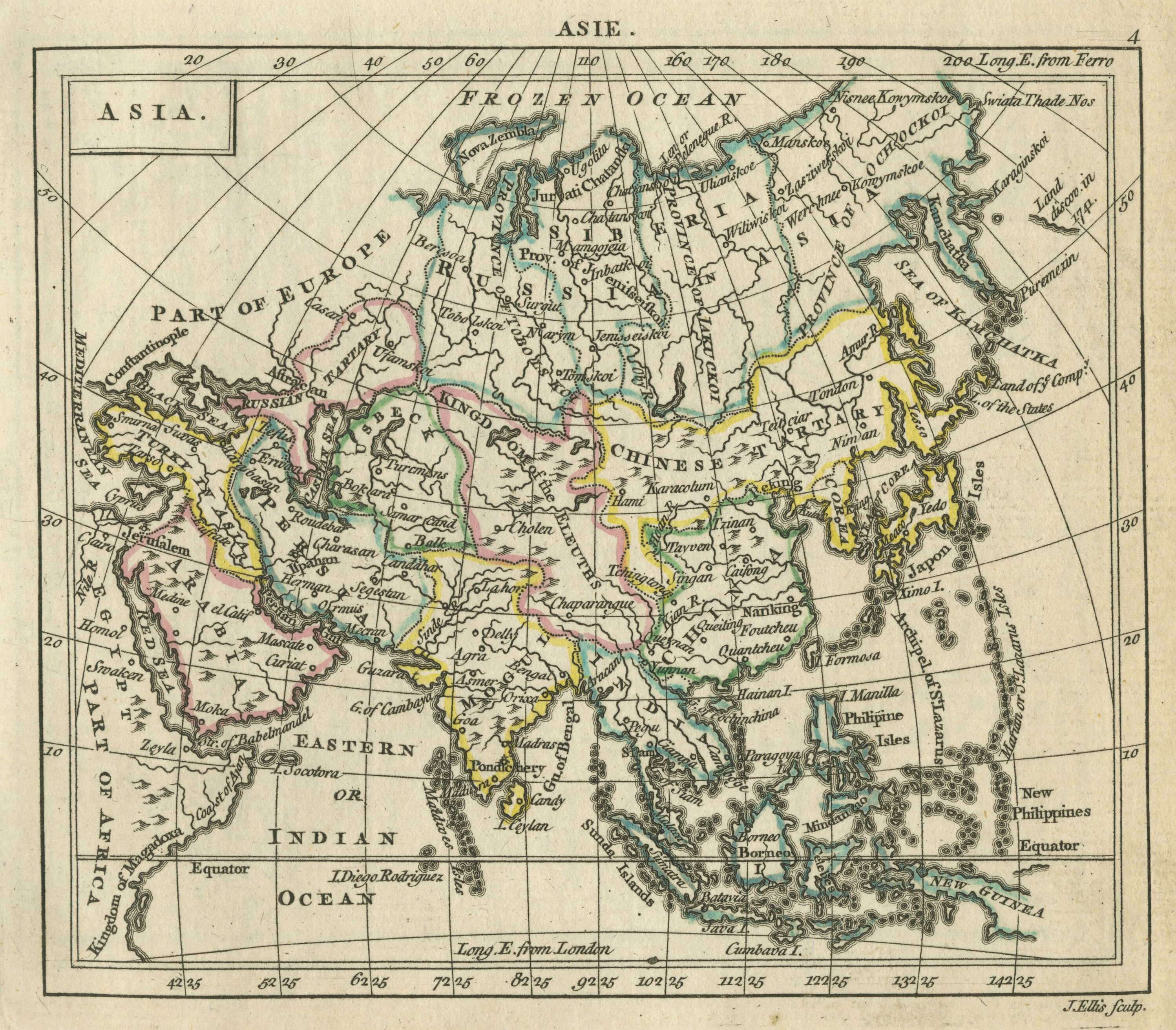 A map of Asia c. 1761
 Robert Clive's victory at the Battle of Plassey established the East India Company as a military as well as a commercial power.
 William Hodges - A camp of a thousand men formed by Augustus Clevland three miles from Bhagalpur with his mansion in the distance
 Battle of Buxar -Crown and company- Arthur Edward Mainwaring pg.144
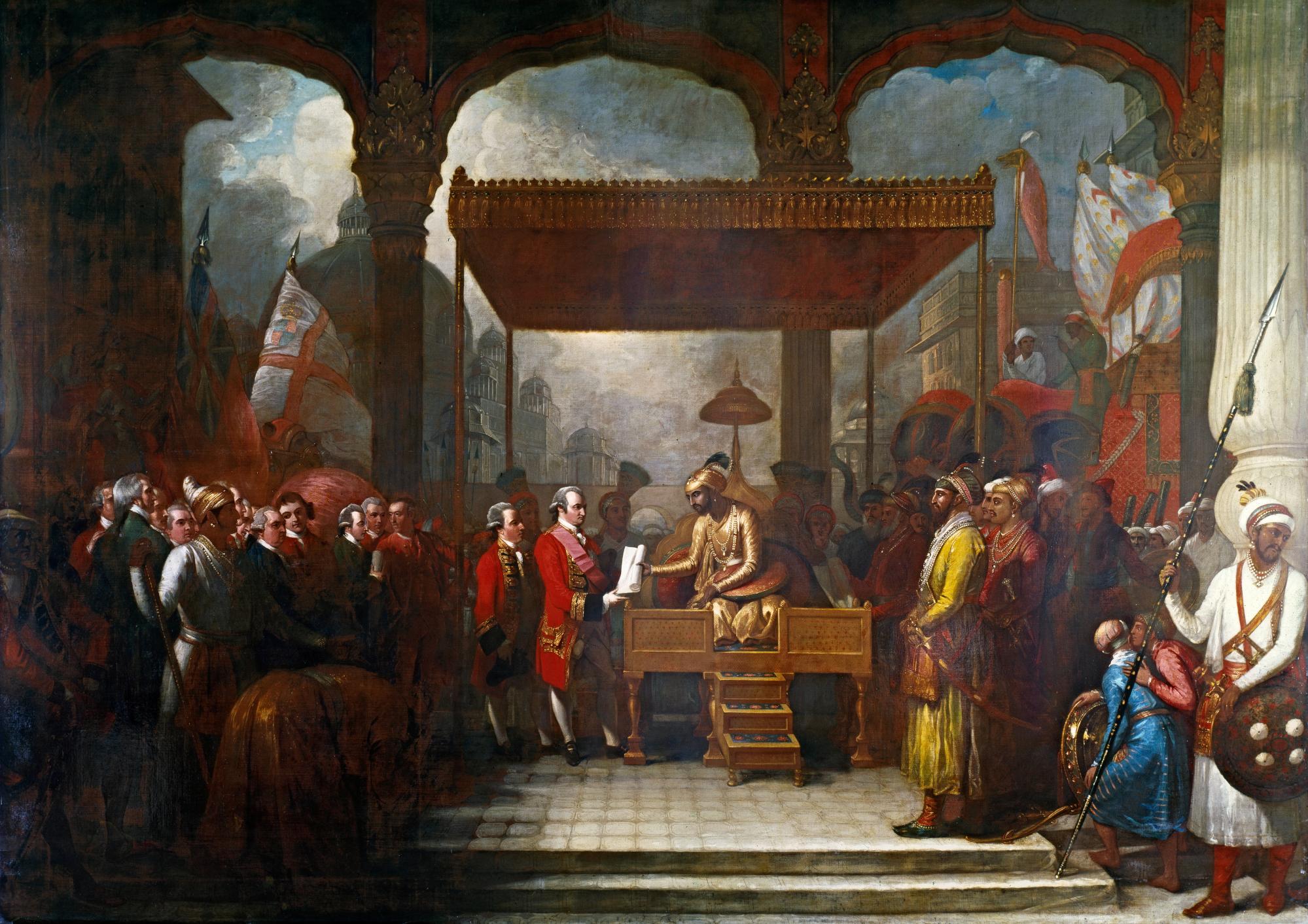 Shah 'Alam conveying the grant of the Diwani to Lord Clive
 Pondichery bombardee par Boscawen en 1748
 Mahratta war in 1803
 Shah Alam II, Mughal Emperor, Conveying the Grant of the Diwani to Lord Clive, August 1765
- బ్రిటిష్ ఇండియా చరిత్ర - , Telugu, 1938
- బ్రిటిష్ ఇండియా చరిత్ర - , Telugu, 1938
| Type | Subtype | Date | Description | Notes | Source |
|---|---|---|---|---|---|
| commons | image | A map of Asia c. 1761 | Commons | ||
| commons | image | Robert Clive's victory at the Battle of Plassey established the East India Company as a military as well as a commercial power. | Commons | ||
| commons | image | William Hodges - A camp of a thousand men formed by Augustus Clevland three miles from Bhagalpur with his mansion in the distance | Commons | ||
| commons | image | Battle of Buxar -Crown and company- Arthur Edward Mainwaring pg.144 | Commons | ||
| commons | image | Shah 'Alam conveying the grant of the Diwani to Lord Clive | Commons | ||
| commons | image | Pondichery bombardee par Boscawen en 1748 | Commons | ||
| commons | image | Mahratta war in 1803 | Commons | ||
| commons | image | Shah Alam II, Mughal Emperor, Conveying the Grant of the Diwani to Lord Clive, August 1765 | Commons | ||


