Lunge mine
From Warlike
Q1802510
The Shitotsubakurai or lunge mine was a suicidal anti-tank weapon developed and used by the Empire of Japan during the Second World War. It used a HEAT type charge. This weapon was used by the CQC units of the Imperial Japanese Army. The weapon itself was a conical hollow charge anti-tank mine, placed inside a metallic container and attached to the end of a wooden stick. The weapon was officially adopted by the Japanese Army in 1944; with the first noted combat use in Leyte in December 1944. During 1945 it caused additional victims in the Pacific Theater, where it commonly saw action against American armour. Later that year, some Japanese Imperial Army manuals of the weapon were discovered by US troops.

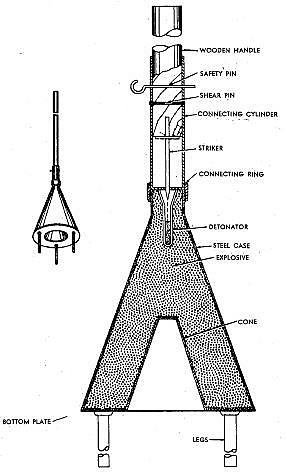 Lunge Mine Schematic
 Hoan Kiem Lake Martyrs Monument (3695178384)
 Lunge AT Mine
 Lunge Mine soldier by Tran-van-Hoe
 Drawing of a Shitotsubakurai Lunge Mine and a visualization of its operation.
 Vietnam Museum of Revolution - weapons
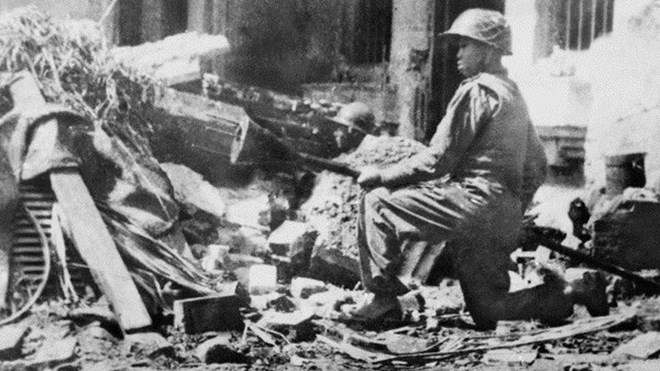 Viet Minh soldier with a Shitotsubakurai lunge mine at Hàng Dầu Street. December 12, 1946.
| Type | Subtype | Date | Description | Notes | Source |
|---|---|---|---|---|---|
| commons | image | Lunge Mine Schematic | Commons | ||
| commons | image | Hoan Kiem Lake Martyrs Monument (3695178384) | Commons | ||
| commons | image | Lunge AT Mine | Commons | ||
| commons | image | Lunge Mine soldier by Tran-van-Hoe | Commons | ||
| commons | image | Drawing of a Shitotsubakurai Lunge Mine and a visualization of its operation. | Commons | ||
| commons | image | Vietnam Museum of Revolution - weapons | Commons | ||
| commons | image | Viet Minh soldier with a Shitotsubakurai lunge mine at Hàng Dầu Street. December 12, 1946. | Commons | ||

.jpg)


