Greek fire
From Warlike
Q179537
Greek fire was an incendiary weapon system used by the Byzantine Empire from the seventh to the fourteenth centuries. The recipe for Greek fire was a closely-guarded state secret; historians have variously speculated that it was based on saltpeter, sulfur, or quicklime, but most modern scholars agree that it was based on petroleum mixed with resins, comparable in composition to modern napalm. Byzantine sailors would toss grenades loaded with Greek fire onto enemy ships or spray it from tubes. Its ability to burn on water made it an effective and destructive naval incendiary weapon, and rival powers tried unsuccessfully to copy the material.

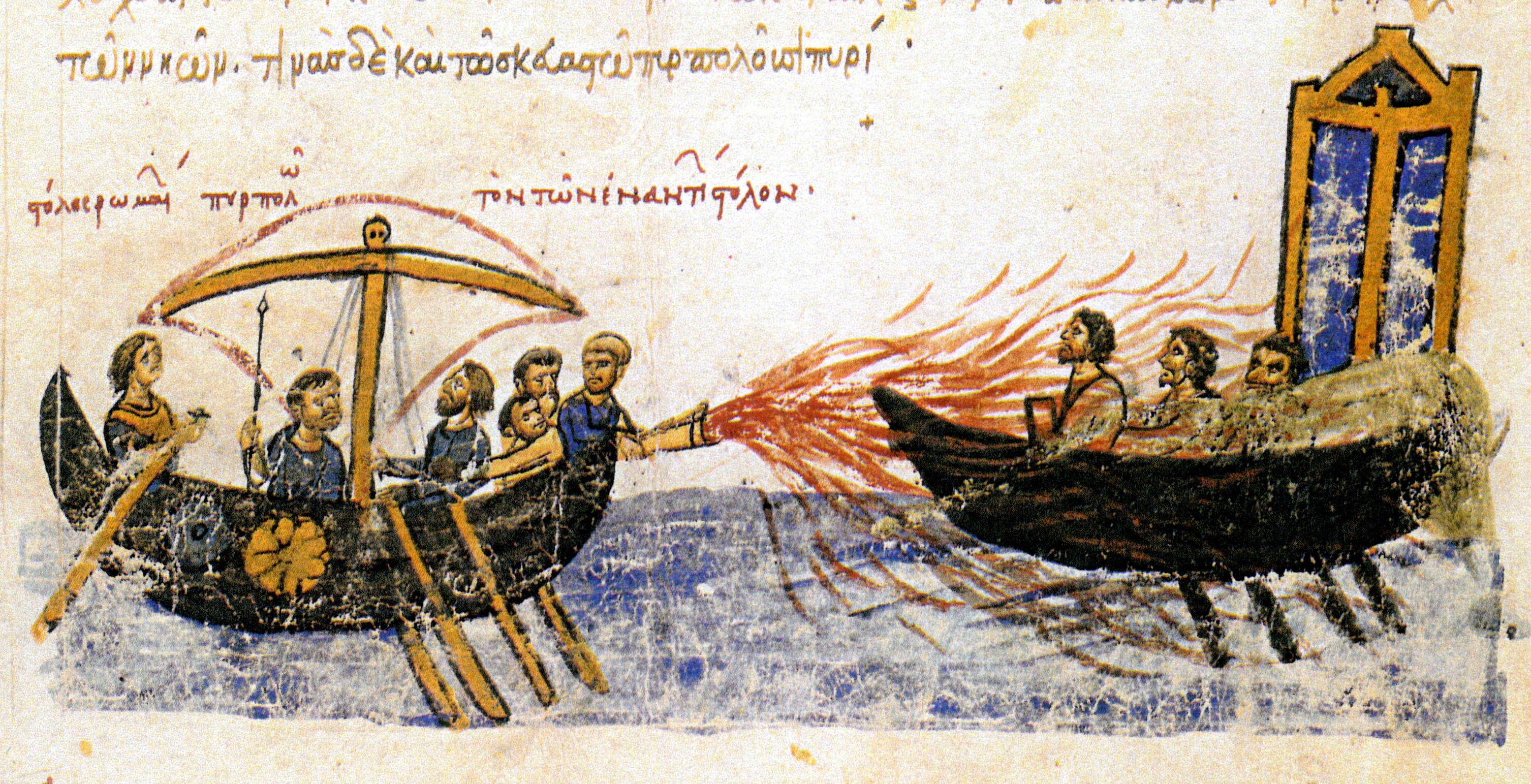 An image from an illuminated manuscript showing the Greek fire used against the renegade fleet of Thomas of Sicily
 Revue des études grecques, Tome 3, 1890 (page 320 crop)An image from an illuminated manuscript showing the Greek fire used against the renegade fleet of Thomas of Sicily
 Beccafumi - 10 Uses of gunpowder
 Whorebab (Book of Revelation)
 Hand-siphon for Greek fire, medieval illumination
 MadridSkylitzesFol34v
 Use of a hand siphon, a portable flamethrower, from a siege tower. Detail from the medieval manuscript Codex Vaticanus Graecus 1605.
 Liquid fire granades Chania
 Detail of a miniature of a Greek fire burning Turks as a result of a miraculous change of wind, and Robert of Nazareth praying.
- A medieval workshop for producing ‘Greek fire’ grenades - , Q1860, 1988
| Type | Subtype | Date | Description | Notes | Source |
|---|---|---|---|---|---|
| commons | image | An image from an illuminated manuscript showing the Greek fire used against the renegade fleet of Thomas of Sicily | Commons | ||
| commons | image | Revue des études grecques, Tome 3, 1890 (page 320 crop) | Commons | ||
| commons | image | An image from an illuminated manuscript showing the Greek fire used against the renegade fleet of Thomas of Sicily | Commons | ||
| commons | image | Beccafumi - 10 Uses of gunpowder | Commons | ||
| commons | image | Whorebab (Book of Revelation) | Commons | ||
| commons | image | Hand-siphon for Greek fire, medieval illumination | Commons | ||
| commons | image | MadridSkylitzesFol34v | Commons | ||
| commons | image | Use of a hand siphon, a portable flamethrower, from a siege tower. Detail from the medieval manuscript Codex Vaticanus Graecus 1605. | Commons | ||
| commons | image | Liquid fire granades Chania | Commons | ||
| commons | image | Detail of a miniature of a Greek fire burning Turks as a result of a miraculous change of wind, and Robert of Nazareth praying. | Commons | ||
.jpg)

.jpg)


.jpg)

